
BuyMMOG
Doris
Pokémon Champions launches its brand-new competitive ruleset, Regulation Set M‑C, on September 9, and the format will run through December 2. This large-scale ranked battle refresh introduces 24 additional playable Pokémon and six brand-new Mega Evolutions, reshaping the online competitive landscape for roughly three months. Among all the incoming content, Mega Golisopod and Mega Baxcalibur have attracted the most attention from the community, thanks to their impressive stat upgrades and meaningful typing adjustments. Even so, their exclusive Mega abilities remain undisclosed ahead of launch, creating major unknowns for competitive team builders. This article breaks down their strengths, flaws, real-world competitive outlook, and shares practical guidance for both serious ranked grinders and casual players.

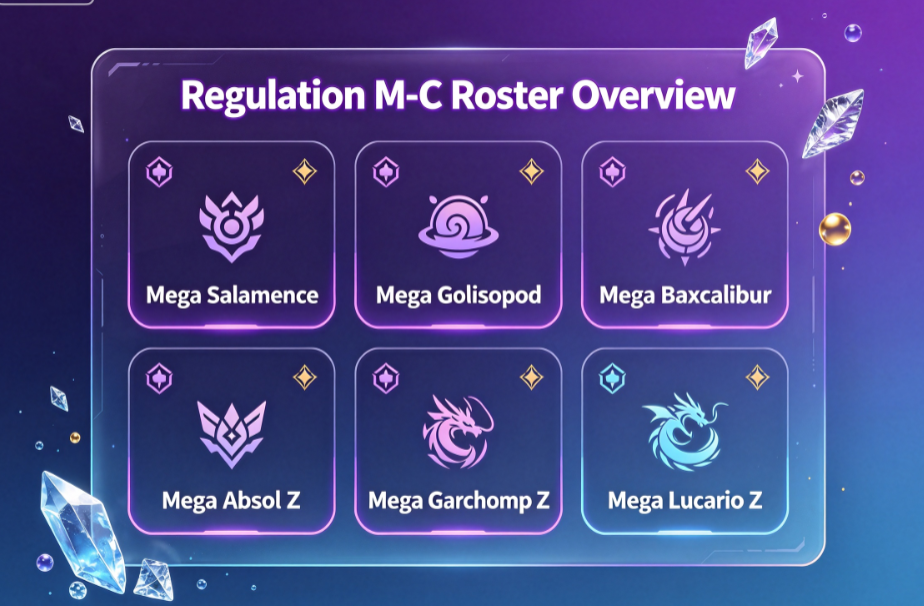
Regulation Set M‑C introduces six Mega Evolutions split into two distinct groups. Three are standard Mega Evolutions: Mega Salamence, Mega Golisopod, and Mega Baxcalibur. The other three are special Z‑Mega variants, including Mega Absol Z, Mega Garchomp Z, and Mega Lucario Z. One key detail for returning players: Pokémon that were legal under older regulation sets remain fully playable in ranked battles, so players do not lose access to their existing favorite team members.
Alongside the Mega options, multiple well-known tournament-proven Pokémon join the eligible roster. Critically, every team may only use one Mega Evolution per battle. This single-Mega rule creates heavy opportunity cost — picking one powerful Mega Pokémon means giving up access to all other Mega forms for your entire roster. This limitation heavily influences how teams are constructed under M‑C rules and makes every Mega choice a high-stakes strategic decision.
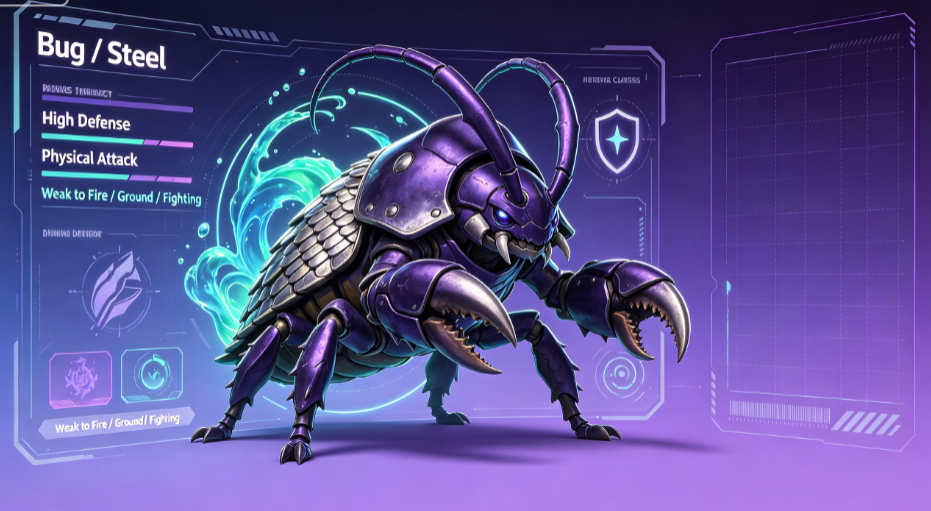
Base-form Golisopod already carries solid competitive credentials, having earned respectable placements in official VGC world tournaments in previous years. Upon Mega Evolution, it trades its original Bug/Water typing for Bug/Steel — a transformation that completely rewrites its resistance and weakness profile.
Its physical attack and defense receive very large increases, turning it into a physical wall that can still deal meaningful damage when windows of opportunity open up. Special defense also gets a solid boost, though its speed remains quite low, meaning it will almost always move second in most matchups.
Right now, its exclusive Mega ability has not been officially revealed, and this single unknown factor will define how strong Mega Golisopod truly is in practice. A well-suited ability could push it into high-tier status, while a mediocre ability would hold it back despite its impressive raw stat totals. Bug/Steel typing grants many useful resistances, yet it retains clear vulnerabilities to Fire-type, Ground-type, and Fighting-type attacks. Any team built around this Mega Pokémon will need teammates that can reliably handle these common threats.
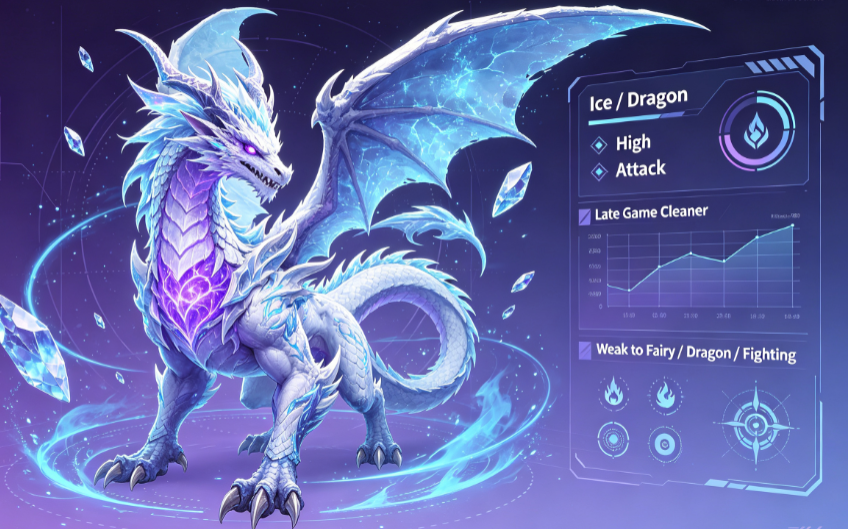
Baxcalibur is the fan-favorite Ice/Dragon pseudo-legendary. Its base form has already seen play at world-level tournaments, yet it has historically struggled with its problematic Ice/Dragon typing, which carries multiple widespread weaknesses. When it undergoes Mega Evolution, Baxcalibur gains improved offensive power and better overall bulk, but it retains its original Ice/Dragon type combination. Many of its historic vulnerabilities therefore remain completely unchanged.
Just like Mega Golisopod, its Mega ability is hidden before release. If this new ability can mitigate some of its typing-related downsides, Mega Baxcalibur could become a genuine top-tier offensive threat. Without supportive ability effects, it risks being another “great on paper” option that struggles against common ranked-battle counters.
Entry hazards such as Stealth Rock will continue to pose consistent pressure for this Ice/Dragon Pokémon. Its expected moveset will focus heavily on physical-based Ice and Dragon STAB damage options, leaning into its already high attack stat to maximize burst damage.

Mega Golisopod has clear competitive upside. Bug/Steel typing gives it numerous useful resistances against many common meta Pokémon. Still, Fire-type and Fighting-type attacks are widely used across competitive play, so it cannot safely stay on the battlefield indefinitely. Teams with partners that absorb or counter those threat types will unlock the full potential of this Mega evolution.
Mega Baxcalibur’s success hangs heavily upon its unrevealed ability. Its high attack stat makes it a terrifying offensive option, but its long list of weaknesses means supportive teammates are mandatory. It will most likely function best as a late-game cleaner rather than a durable defensive wall that stays in for extended turns.
The Mega-slot limitation applies equally to both Pokémon. Choosing either one consumes your team’s only Mega Evolution resource, so you sacrifice other powerful Mega choices. Popular counters including Fire-type, Fighting-type, Fairy-type, and Steel-type Pokémon will likely see increased usage as players adapt their rosters to answer these two new threats.
From my perspective, holding back Mega ability details until launch creates unnecessary frustration for competitive players. People preparing teams for day-one ranked matches cannot make accurate, informed build decisions. Players are forced to guess and waste time through trial and error during the opening weeks of Regulation M‑C, which hurts the early competitive experience.
I also believe fans frequently overrate new forms purely based on raw stat numbers. High stats alone will never guarantee meta dominance. Both Mega Golisopod and Mega Baxcalibur carry severe typing weaknesses that skilled opponents can easily exploit. Hype around new releases often ignores these real-world counterplay possibilities and overstates how strong a Pokémon will actually be in practice.
Additionally, many players underestimate the opportunity cost of the Mega slot. Committing your one Mega resource to a single Pokémon shapes your entire roster. It is not a simple “free power boost,” and every pick comes with real strategic trade-offs. I anticipate the early M‑C meta will be very chaotic. We will see widespread experimentation with these new Mega forms, and several weeks will pass before the community settles into a stable, predictable competitive environment.
Before you start building teams, make sure you review the full Regulation M‑C legal roster inside the game. Check the roster information menu to confirm every eligible fighter available for ranked play, rather than relying solely on community leaks or pre-patch speculation.
Do not rush these new Mega forms straight into high-stakes ranked matches on update day. Test them inside casual matches first to understand their real-world limits against common opponents and get a feel for their actual speed tier and damage output.
Always prepare teammates that cover each Mega Pokémon’s biggest weaknesses. If you run Mega Golisopod, bring allies that can handle Fire-type attackers. For Mega Baxcalibur, plan answers for Fairy-, Dragon-, and Fighting-type threats. Competitive players should prepare multiple candidate teams instead of locking into one single roster immediately after the patch goes live. Casual players do not need to chase meta perfection; focus on enjoying the fresh gameplay possibilities and adjust your roster for fun rather than pure win-rate optimization.
Mega Golisopod and Mega Baxcalibur bring exciting new options for Pokémon Champions under Regulation Set M‑C. Mega Golisopod gains a highly practical Bug/Steel typing alongside massive physical-focused stat improvements. Mega Baxcalibur amplifies its already formidable offensive power to even higher levels. Even so, unreleased Mega abilities, persistent type weaknesses, and the high cost of your limited Mega slot all act as important balancing factors.
Neither of these two Mega Evolutions is guaranteed to become overpowered meta kings. Their true strength will only become clear as thousands of players test them in real online battles. The September M‑C update rewards creative team-building instead of forcing everyone to copy one single optimal setup. Whether you chase high-ranked results or just play for casual entertainment, take time to experiment and adapt across this three-month-long ruleset cycle.