
College Football 27
Doris
EA College Football 27 delivers one of the most complete college football experiences in the franchise’s history. This title combines refined on-field football simulation with layered off-field management systems across multiple distinct game modes. Many guides online only focus on one isolated part of the game, such as Dynasty recruiting or online competitive tactics. This universal guide covers every core piece of the game, whether you enjoy running an entire college athletic program, controlling a single athlete’s career, or jumping straight into quick head-to-head matches.
Compared with earlier entries, two massive changes define CFB 27. First, the on-field gameplay received sweeping upgrades to passing mechanics, defensive AI, and pre-play customization. Second, off-field systems including Dynasty Blueprint, expanded NIL rules, and reworked Road to Glory progression add unprecedented depth.
The game splits its content into multiple independent modes: Dynasty, Road to Glory, casual Play Now, online competitive ladder matches, and arcade-style Mascot Mashup.
Personal viewpoint: A huge number of players lock themselves into just one mode and never experience everything the game offers. What’s more, skills you learn on the football field translate across every mode. Even if you only plan to play Road to Glory and never touch Dynasty, learning basic offensive and defensive logic will immediately improve your game performance.
Everything you learn on the field applies no matter which mode you launch. The most impactful update this year is the revised timing-based catching mechanic. When throwing passes, receivers feature color-coded catch windows. Green timing delivers reliable catches, yellow results in average outcomes, and poorly timed red windows drastically raise drop chances. New players often forget this system exists and struggle to understand why seemingly easy passes keep falling incomplete.
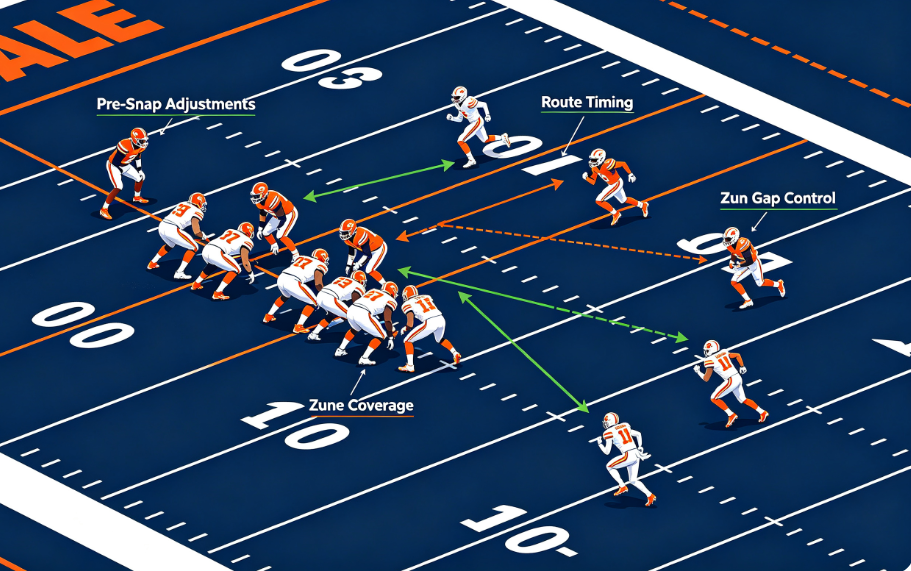
Pre-snap adjustments represent the biggest hidden advantage for new players. Before every snap, you can tweak dozens of rules: adjust how aggressively your defense attacks the run, set zone coverage behavior, modify offensive pass protection, and change how your team reacts to scrambling quarterbacks. Most casual players skip this menu entirely and fight against default settings that work poorly against their opponent’s tendencies.
When picking playbooks, avoid blindly chasing whatever the internet labels as “meta”. Your playbook should match your natural play style. If you prefer balanced run-and-pass offense, choose spread-focused playbooks. If you want to lean into physical ground-and-pound football, look for pro-style or power run sets. On defense, the versatile 4-2-5 base scheme works for most players, capable of stopping both rushing attacks and passing concepts.
Independent opinion: Memorizing hundreds of individual plays will not make you better. Learning how to adjust before the snap and recognize opponent formations creates consistent wins. Players who rely on spamming the same few plays become predictable and easy to defend against.
Common universal on-field mistakes: Over-reliance on deep vertical passes, refusing to run the ball on short-yardage situations, ignoring the game clock, and failing to adapt your game plan after halftime.
Dynasty remains the flagship experience of CFB 27, focused on long-term program building, recruiting, and roster management. The new Dynasty Blueprint system governs coach progression, and after the major mid-season title update, the fully customizable XP sliders were replaced with three fixed speed presets: Career, Simulation, and Casual.
Base 1.0x progression, designed for authentic multi-season long playthroughs.
1.25x speed, balanced for most players who want steady progression.
1.5x speed, fastest unlock rate for anyone wanting quicker coach ability upgrades.
Once you select a preset when creating your save, you cannot easily alter it later, so choose carefully based on how many seasons you plan to simulate.
The NIL budget system is widely misunderstood. Funds are split into two separate pools: recruiting NIL used to attract high school athletes and transfer targets, and roster NIL reserved for retaining players already on your roster. The vast majority of new coaches dump nearly all resources trying to sign new prospects, ignoring existing team members. When current players feel under-compensated, their Risk of Leaving rating climbs, and many will enter the Transfer Portal during the offseason, triggering mass roster losses.
For high school recruiting: Keep in mind verbal commitments are not permanent. CPU rival schools can continue recruiting committed prospects and steal them late in the cycle. Always reserve part of your recruiting budget to defend your committed targets instead of spending everything chasing uncommitted talent. Every prospect also lists dealbreaker requirements, such as starting position guarantees or conference preferences. Wasting recruiting points on prospects whose hard requirements you cannot satisfy is one of the most costly errors new players make.
The Transfer Portal acts as your shortcut for immediate roster improvement. Build a simple habit: never fill all available scholarship spots before bowl season. Top transfer athletes appear after bowl games, and empty slots are mandatory to sign them. You also need to learn to filter portal prospects: some five-star freshmen carry elite star ratings but poor development traits, making them low-value traps.
My core philosophy: Transfers solve short-term holes on your roster. They cannot replace sustainable high-school recruiting pipelines. If you rely solely on buying veteran transfers every offseason, your team will lack young talent to replace graduating athletes and will struggle after two or three seasons. It is a supplement, not a full replacement.
Road to Glory lets you create a custom athlete and build a college football legacy from high school all the way to the NFL draft. When creating your player, you set a permanent maximum potential ceiling that shapes your entire career. You can begin your journey in high school to collect scholarship offers, or skip straight to college and pick an existing program.
Each week brings a weekly agenda. You allocate time between practice, rest, media appearances, and team meetings. Practice sessions earn skill points to raise attributes, but constant training causes fatigue, lowering your in-game performance on game day.
Personal observation: Many players fall into the trap of filling every weekly slot with training to grind stats. This approach backfires. Scheduling rest regularly keeps your energy high and maintains coach trust. Positive relationships with your head coach unlock extra playing time and better starting opportunities, which matter far more than marginal attribute gains from endless practice.
Your Legacy Score tracks all your career achievements and directly impacts your NFL draft projection. Standout bowl performances, conference awards, and Heisman candidacy will push your stock higher. Poor team results or low game grades will drag it down, even if your personal stats look strong.
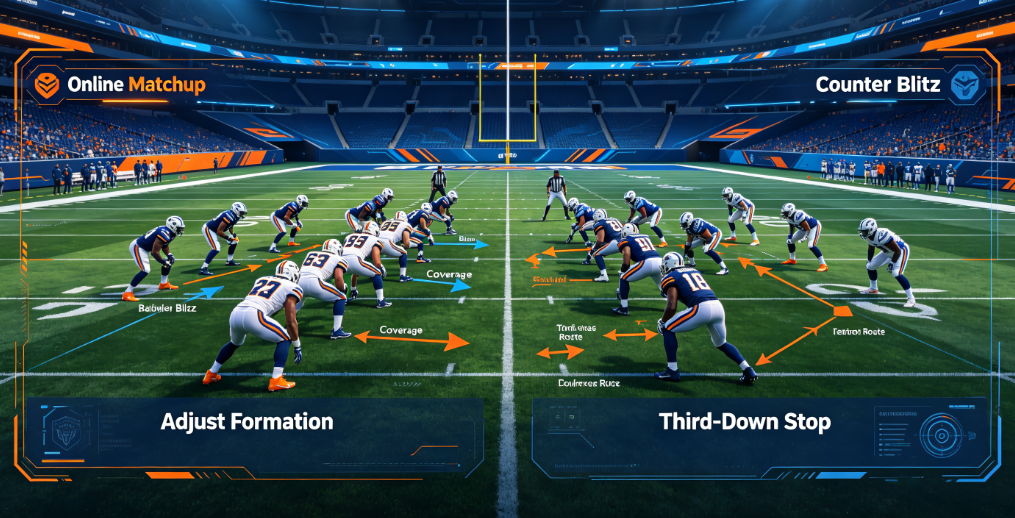
Play Now and online competitive mode strip away all management systems and focus purely on live football. Playing against human opponents requires a different mindset than battling CPU AI. CPU teams follow predictable patterns, while human players actively adapt to counter your favorite plays.
Defensive discipline separates average online players from skilled competitors. Avoid overpursuing running backs to chase tackles; this creates massive cutback lanes opponents will exploit constantly. Learn to balance zone aggression: ultra-aggressive zone settings produce more turnovers but leave you vulnerable to quick cross-field routes. Conservative zone coverage reduces big plays but struggles to generate stops on third down.
Situational decision-making wins many close matches. Many players automatically choose to receive the opening kickoff every game, but kicking first can be a valid strategy. If you force your opponent to burn their first timeout early, you gain clock control heading into halftime. On fourth down, weigh field position, score gap, and remaining time instead of blindly punting or going for it every time.

Before starting any save or match, spend time optimizing your settings. New players should start on lower difficulty and gradually increase it rather than jumping straight to Heisman. If you struggle with the timing catch meter, you can adjust its behavior or disable it temporarily to learn passing fundamentals.
Set intermediate catch aggression to Aggressive, deep passing to Conservative to avoid unnecessary interceptions.
Gap Integrity set to Conservative to limit over-pursuit, defender aggression balanced to avoid constant blitz failures.
Disable Auto Flip Defense if you want full manual control over pre-snap alignment shifts. This small change gives you far more power to counter opponent formations. Test different camera angles to find one that lets you read routes and defensive alignment before the snap.
Best for long-term simulation fans who enjoy building programs from the ground up.
Best for immersive single-player storytelling and athlete career progression.
Perfect for groups of friends looking for quick, casual matches without management menus.
Ideal for competitive head-to-head testing of tactical skill against real players.
Suggestion: Do not lock yourself into one mode permanently. Use quick Play Now matches to test offensive and defensive tactics before you try them inside your long-running Dynasty save. Alternating modes prevents burnout and lets you experience all the content the game provides.
If you encounter these issues, pause and diagnose the root cause rather than continuously repeating the same strategy. Small adjustments often deliver dramatic improvements.
EA College Football 27 succeeds most when you approach it with realistic expectations. The on-field football simulation stands among the best in sports gaming, with fluid player movement, improved blocking AI, and a wide range of customizable tactics. The off-field management systems offer hundreds of hours of content for simulation lovers.
That said, the game carries clear flaws. Several Transfer Portal AI bugs still exist; some top prospects vanish without signing any program. The removal of fully customizable coach XP sliders limits creative sandbox players, and the learning curve can feel steep for complete newcomers who have no experience with American football rules.
For the best experience, adjust your goals to match the mode you pick. If you play Dynasty, treat it as a multi-season program building journey instead of trying to assemble an unbeatable all-star roster within one year. If you play competitively online, focus on adaptability rather than copying popular tactics you see online. If you enjoy Road to Glory, embrace the career narrative instead of obsessing only over maxing every stat.
At its core, College Football 27 rewards strategic patience. Victories rarely come from one single overpowered trick. Consistent, intelligent decision-making on and off the field creates the most satisfying gameplay moments across every available mode.