POE2 Abyss High Risk Farming: How To Maximize Divine Orbs With Smart Risk Control
Abyss can be one of the highest-upside endgame strategies in Path of Exile 2 — but only if you respect the risk. This guide breaks down factions, build setup, execution, realistic profits, and practical risk control.
Introduction
Among Path of Exile 2 endgame strategies, Abyss farming is extremely polarizing. Some players use it to build large amounts of currency quickly, while others burn through maps, tablets, and time with very little to show for it.
The reason is simple: Abyss rewards are not designed to be safe and passive. They are designed to fluctuate. The more risk you take on — through stronger monsters, more expensive maps, and higher-density layouts — the higher your potential returns, but also the faster you can lose currency.
Key Takeaway: Do not approach Abyss as a guaranteed Divine printer. Treat it as a high-risk, high-reward strategy that depends on build strength, setup quality, mechanical skill, and emotional control.
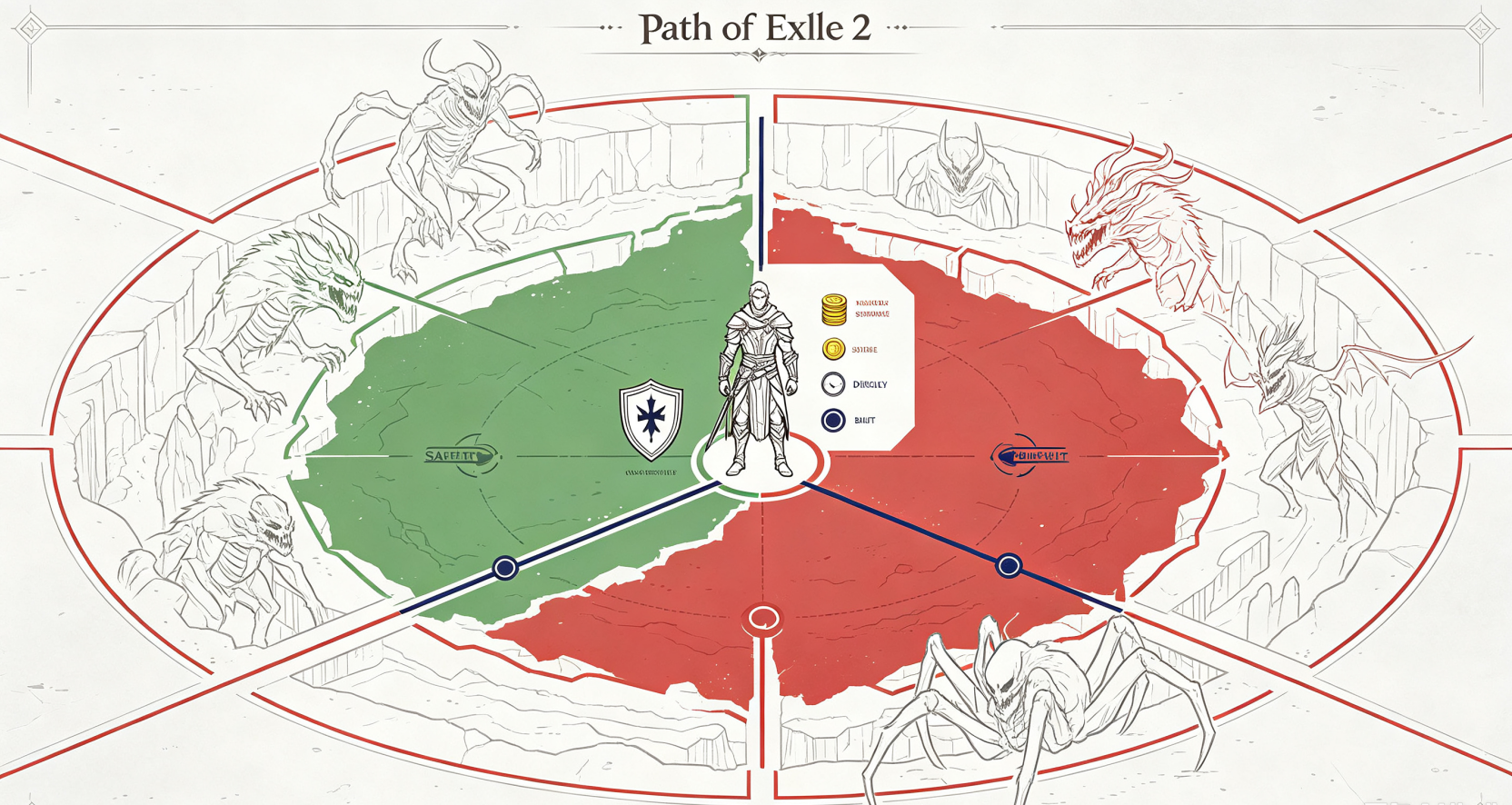
Abyss creates a direct tradeoff between risk and potential reward.
Ulaman vs Amanu: Practice vs High-Risk Play
After unlocking the basic Abyss atlas passives, you will eventually need to decide between two playstyles: Ulaman and Amanu. This choice changes almost everything about how your maps feel and how your income behaves.
Ulaman — The Safer Training Route
Ulaman is generally the more beginner-friendly option. It tends to emphasize steady currency chests and more forgiving monster difficulty, making it a reasonable choice for learning the Abyss loop without risking huge amounts of currency early on.
Amanu — The High-Risk, High-Reward Route
Amanu is where the really large potential returns live. It is the faction most associated with high-value omens and big Divine drops. The tradeoff is much harsher monster behavior and tighter mechanical requirements.
Critical Mechanic: In Amanu, you must be very careful about where you fight rare monsters. If you kill them inside the black cloud, you may miss the high-value omen opportunities that make the strategy profitable.
Scattered Sinkholes vs Effect Strength
One of the most important passive choices is Scattered Sinkholes. This is usually the better direction because it increases the number of high-value enemy encounters and can lead to more jewelry opportunities.
Personal View: Many new players see Amanu’s big reward potential and assume it is automatically better. In reality, it is often worse for weaker builds because it raises pressure without guaranteeing better results.
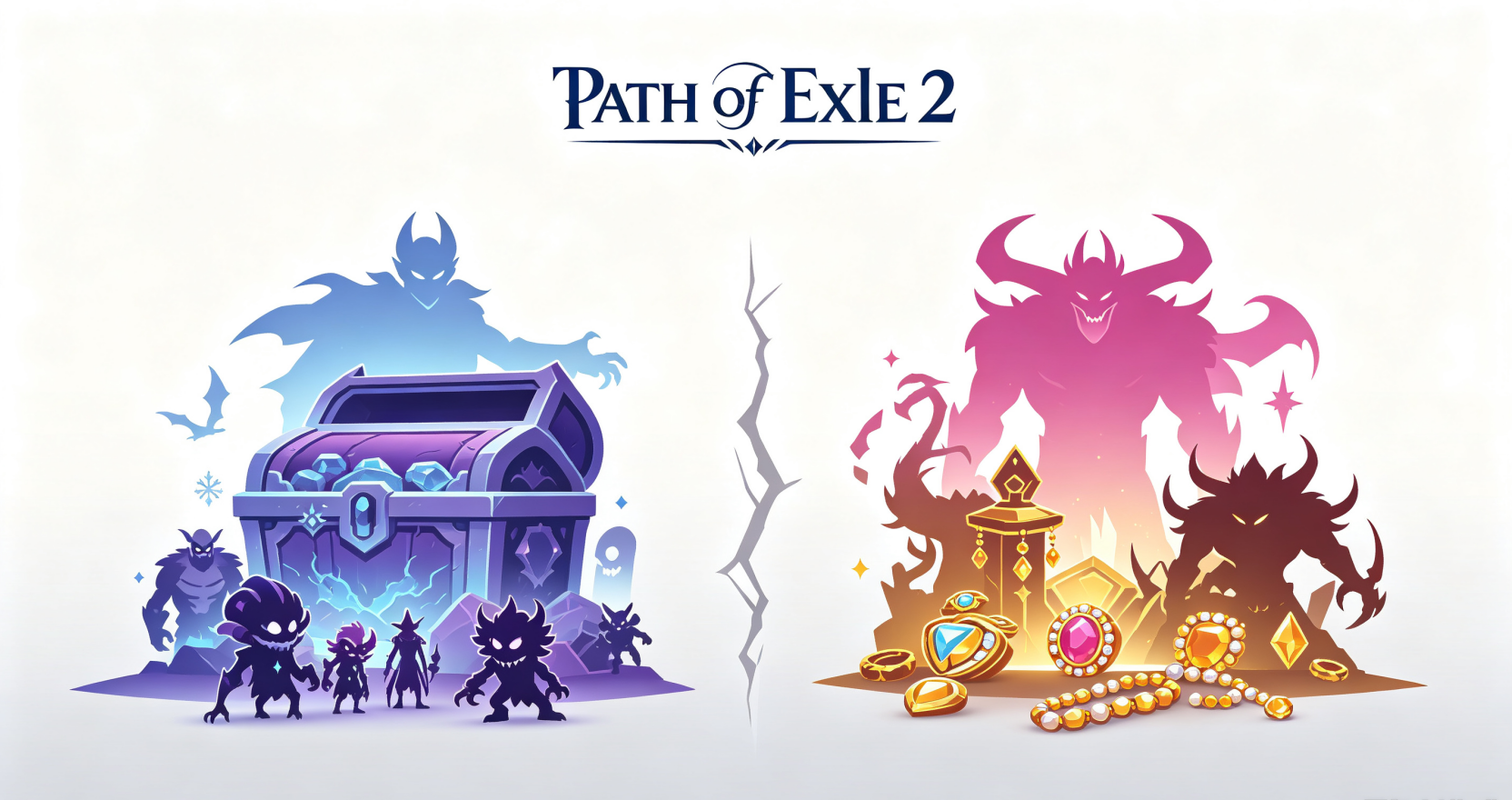
Ulaman favors steadier progression, while Amanu pushes the reward ceiling higher.
Atlas, Tablets and Map Setup
A good Abyss setup is not just about stacking as many modifiers as possible. It is about matching your build’s strength to the content, so you can actually survive and collect the rewards.
Atlas Passive Order
Start with the general Abyss nodes that increase sinkhole frequency, monster quantity, and overall consistency. Once those are solid, you can invest into faction-specific benefits.
Tablets Are Your Biggest Recurring Cost
Tablets can be extremely expensive, especially if you chase perfect rolls. Prioritize modifiers that actually increase Abyss-related rewards. Avoid stacking too many dangerous monster modifiers if your build cannot handle them.
Map Tier and Mods
Most players start from high-tier maps like T15. Six-mod maps can offer strong theoretical returns, but they also raise damage, life, and rarity pressure dramatically.
Practical Rule: If you are dying regularly, reduce the map strength first. Five-mod, four-mod, or even slightly weaker maps can still be profitable. A dead build makes every map a loss.
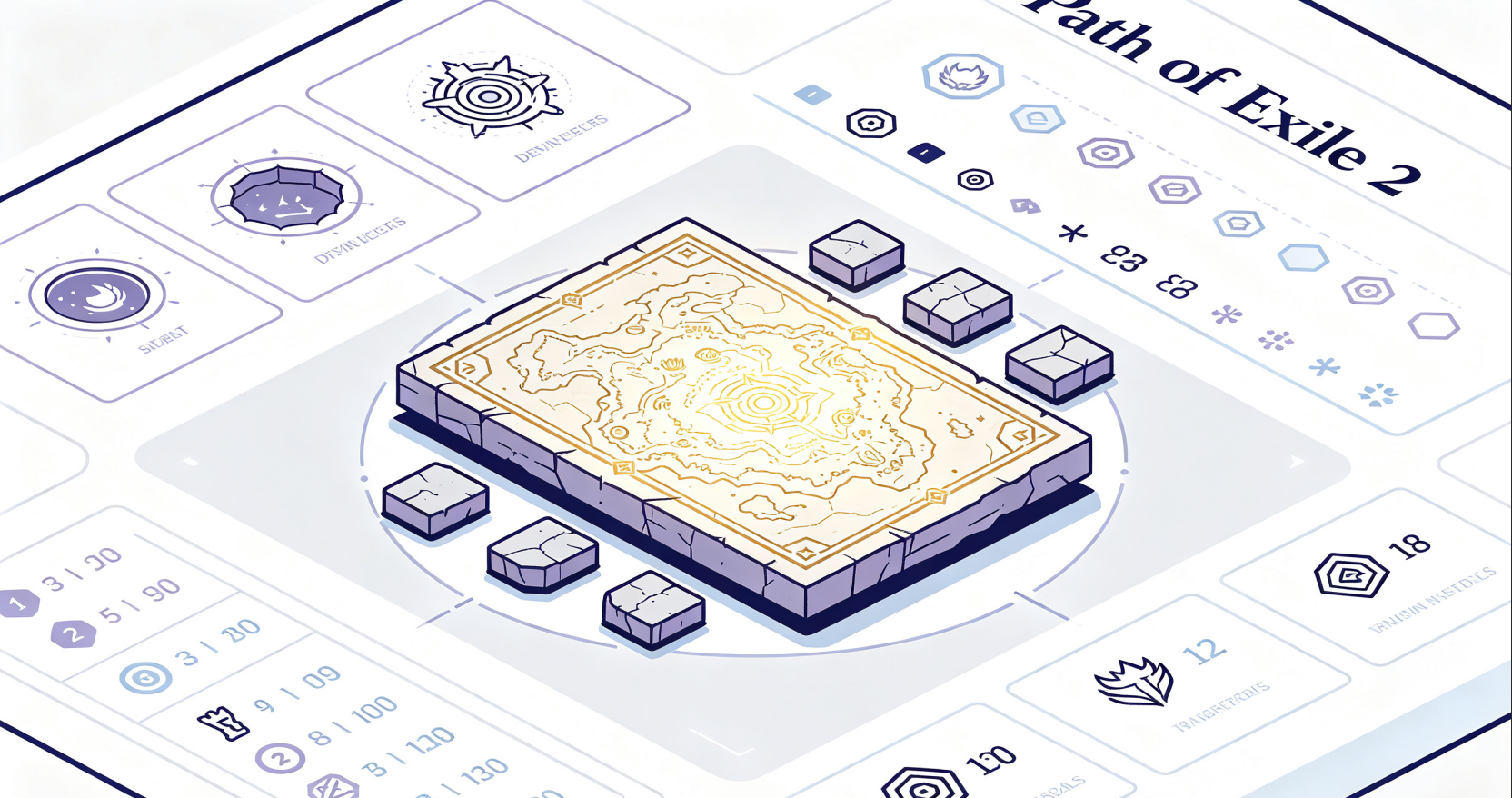
Tablets and map mods should scale with your build, not just with theoretical profit.
In-Game Execution Tips
Even a great build and perfect setup can lose currency through sloppy play. Abyss rewards attention, positioning, and disciplined pacing.
Handle Rare Monsters Carefully
Always be ready to reposition rares. Do not fight them in bad locations by default. If possible, move them to safer open ground before committing your biggest damage abilities.
Do Not Rush Unnecessarily
Abyss can spawn a lot of enemies very quickly. When packs start to overlap, the damage can become overwhelming. It is often better to clear slightly slower and stay alive than to sprint ahead and die.
Treasure Vaults vs Deeper Abyss
Sometimes you will finish a sinkhole sequence and get a treasure vault. Other times you may open a deeper Abyss area. The deeper version can offer better rewards, but it is also more dangerous.
Realistic Profit Expectations
One of the biggest mistakes players make is assuming every Abyss run will end with a huge payday. The reality is much more uneven.
Profit Reality: Large Divine-per-hour screenshots are often lucky outliers. They are useful for showing the strategy’s ceiling, but not for predicting your average outcome.
Where the Income Actually Comes From
A more realistic view is to think of Abyss income as a mix of several sources: basic currency from chests, random omens, Abyss jewels, special unique jewelry rolls, and miscellaneous drops.
Ulaman Stability vs Amanu Volatility
Ulaman tends to be steadier. It may not produce the same highlight-reel drops, but it is also less likely to drain your currency through expensive failed runs. Amanu has a higher ceiling and a much higher variance.
The Hidden Risks of Abyss Farming
Abyss risk is not just about dying to mobs. It is also about economic risk, mechanical mistakes, and patch changes.
Risk 1 — Survival Risk: High-tier maps and strong tablets can spike monster damage enough to kill even well-geared characters if they misposition or lag.
Risk 2 — Economic Risk: Expensive tablets and maps mean that even a few dry runs can erase a lot of your progress.
Risk 3 — Mechanical Risk: Simple mistakes, like killing a rare monster in the wrong area, can cost you the high-value drops that make the run worthwhile.
Risk 4 — Patch Risk: Changes to monster damage, drop rates, or item values can make a previously strong strategy much less profitable.
Practical Risk Management
If you want to farm Abyss consistently, risk management matters more than chasing the absolute maximum possible return.
Staying inside your build’s safe operating zone protects your currency better than forcing maximum difficulty.
Rule 1 — Know Your Build: Do not run Amanu just because it has bigger rewards. Only run it if your build can survive the damage and kill important targets quickly.
Rule 2 — Turn Down the Difficulty: If you keep dying, reduce map mods, reduce tablet strength, or switch back to Ulaman. There is no prize for suffering through unbeatable content.
Rule 3 — Protect Your Currency: Keep a reserve. Do not bet almost all of your wealth on one session or one expensive setup.
Rule 4 — Use a Good Filter: High-value omens and jewels should be impossible to miss. A good filter is part of good profit strategy.
Rule 5 — Control Your Mindset: Accept dry runs. Do not increase your stakes just because you want to recover losses quickly.
Conclusion
Abyss farming is one of the most interesting endgame strategies in Path of Exile 2 because it gives you direct control over your risk/reward balance. You can choose a steadier, safer route, or you can push into much higher-risk territory for a shot at significantly larger returns.
The mistake most players make is only looking at the high-reward side. They copy expensive setups, ignore their build’s weaknesses, and treat every run as if it should end in a massive payout. That is a great way to burn through currency.
The better approach is to start modestly, learn the mechanics, match your setup to your build, and protect your currency with sensible limits. If you can do that, Abyss can be an extremely satisfying and profitable endgame choice.


 Monopoly Go

 FC 27
FC 27

 College Football 27
 Wardogs
 NBA 2K27
 Madden NFL 27
 Path of Exile 2
 Diablo 4
 Elden Ring
 Pokemon Go
 Steal a Brainrot
 Travel Town
 CoD: Black Ops 7
 ARC Raiders
 Borderlands 4
 Grow A Garden 2
 Palworld
 Dice Dreams
 Marvel Rivals
 Whiteout Survival
 Pokemon TCG Pocket
 EA FC 25
 Bigo Live
 Throne And Liberty
 MLB The Show 26
 Royal Match
 Carnival Tycoon
 Roblox
 Royal Kingdom
 MLB The Show 25
 Odin: Valhalla Rising
 Grow A Garden
 GTA 6
GTA 6
 Madden NFL 24
 NBA 2K24
 Dungeonborne
 Skull & Bones
 Last Epoch
 GTA 5
GTA 5
 AFK Journey
 Coin Master
 Night Crows
 MLB The Show 24
 Monster Hunter Now
 Elder Scrolls Online
 Dark Soul 3
 Dark and Darker
 NBA 2K25
 NBA 2K 22
 NHL 22
 Path of Exile
 Lost Ark
 FIFA 23
 Madden NFL 22
 FUT 22
 NBA 2K23
 CoD: Black Ops 6
 FC 26
FC 26
 NBA 2K26
 Madden NFL 26
 NHL 23
 Brawl Stars
 Squad Busters
 Madden NFL 25
 MapleStory 2
 King of Avalon
 Madden NFL 23
 NBA 2K 21
 Madden NFL 19
 Riders of Icarus
 MapleStory M
 World Of Warcraft EU
 FUT 21
 WOW US
 Madden NFL 21
 Runescape
 College Football 25
 FIFA 24
 MIR M
MIR M
 College Football 26
 Star Citizen